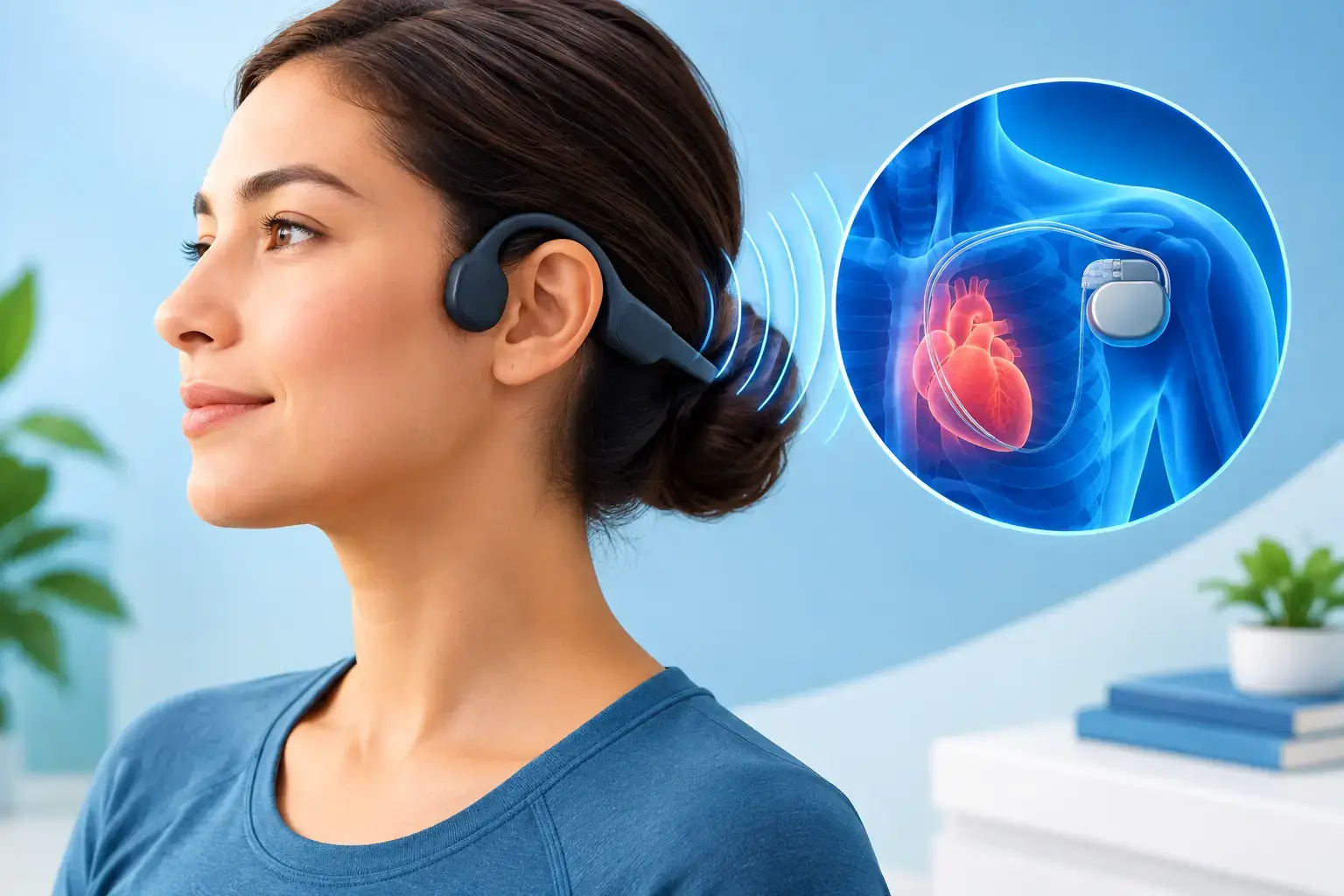
A headset can sit only inches from a pacemaker, which makes the question more than a shopping detail. Are bone conduction headphones safe for pacemakers? The honest answer is: it depends on the headset’s magnet design, the pacemaker manufacturer’s guidance, and your own cardiology team. Bone conduction itself is not the primary concern. Magnets near an implanted cardiac device can be.
For people who need personal audio but cannot safely use conventional earbuds or headphones, a magnet-free open-ear headset can be a practical alternative. The right choice starts with understanding what creates the risk and what to ask before wearing any device.
Why magnets matter around pacemakers
Many consumer headphones use magnets in their speakers. That is how a conventional driver turns an electrical signal into sound. Depending on the design, those magnets may be positioned close to the ear and head.
Pacemakers and implantable cardioverter defibrillators, often called ICDs, can include a magnetic response. A sufficiently strong magnet placed close enough to the implant may temporarily change how the device operates. The exact response differs by device model and programming. For example, a magnet may place some pacemakers into a specific pacing mode, while it may temporarily suspend certain ICD therapies. The effect usually ends once the magnet is moved away, but it is still not something to test on your own.
This is why many device manufacturers advise keeping magnets and electronics containing magnets a minimum distance from an implanted device. That distance is not universal. Your cardiologist or electrophysiology team can tell you what applies to your specific pacemaker or ICD.
The concern is not limited to over-ear headphones. Magnetic earbuds, neckband headphones, charging cases, smartwatches, phone accessories, and even magnetic clasps can deserve a second look. A device may appear small, but its magnetic components may still matter when held close to the chest or carried in a shirt pocket.
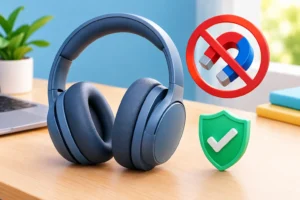
Are bone conduction headphones safe for pacemakers when they are magnet-free?
Bone conduction headphones transmit sound differently from traditional headphones. Rather than placing speakers in or over the ear canal, they rest on the cheekbones or temples. Small transducers create gentle vibrations that travel through the skull to the cochlea, the part of the inner ear that processes sound. The auditory nerve then carries those signals to the brain.
That open-ear design can be useful for people who want to hear music, calls, navigation, or podcasts while still hearing traffic, coworkers, warning signals, and conversation around them. But placement on the temples alone does not make every bone conduction headset automatically appropriate for someone with a pacemaker.
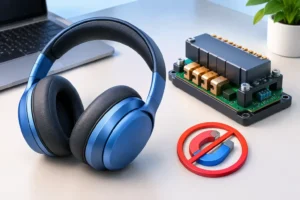
Some bone conduction products still use magnets within their transducers. Others may use magnetic charging connections or magnetic accessories. If a product contains magnets, the appropriate separation guidance still matters, even if the headset does not cover the ears.
A genuinely magnet-free bone conduction headset removes that particular source of concern from the device worn on the head. That can make it a more suitable option for many people with implanted medical devices, but it should not replace personalized medical advice. Ask your implanting physician or device clinic whether a specific magnet-free headset is appropriate for you.
What to check before choosing a headset
The word “bone conduction” is not enough information. Look beyond the category label and ask direct questions about the construction of the product.
First, confirm whether the headset itself contains magnets. Do not assume that a headset is magnet-free because it is open-ear, lightweight, or marketed for exercise. Ask about the transducers, speakers, charging method, and any detachable accessories.
Next, check your pacemaker or ICD documentation. Your device card, manufacturer instructions, or care team may provide guidance on magnets and minimum distances. If you do not have that information, call the clinic that monitors your device. They can often answer a product-specific question quickly, particularly if you can provide the headset model and its magnet details.
Also consider how you will use the headset. A headset on the temples is generally farther from a chest implant than a phone in a breast pocket or an earbud case clipped to a lanyard. Still, safe habits matter. Avoid storing any electronic accessory or charging case directly over your implant unless your care team has confirmed it is acceptable.
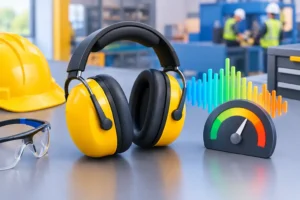
Finally, think about sound level. A headset can be compatible with a pacemaker and still be unsafe for hearing if it is played too loudly. For work settings, an OSHA-conscious option capped at 85 dB can help support safer listening practices. The cap does not make a noisy workplace safe by itself, and it does not replace required hearing protection, but it can prevent the headset from becoming another source of excessive sound exposure.
A practical conversation to have with your care team
You do not need to become an expert in cardiac device engineering before buying headphones. A few clear questions can give your clinician what they need to advise you:
- Does my pacemaker or ICD have a magnetic response I should be aware of?
- What minimum distance should I keep between magnets and my implant?
- Is a magnet-free bone conduction headset acceptable for my device and health needs?
- Are there other electronics or accessories I should avoid carrying near my chest?
If you have recently had an implant procedure, follow any additional recovery and activity restrictions from your clinician. Headphones are only one part of returning to exercise, work, or daily routines safely.
Situational awareness is a separate safety benefit
For many headset users, the value of bone conduction is not only about avoiding magnets. Because the ears are not covered, you can remain more aware of the environment around you. That matters when walking near traffic, cycling on shared paths, working around moving equipment, or waiting for a child or coworker to call your name.
Open ears do not guarantee safety. You still need to follow local rules, workplace policies, and common sense. In a high-noise environment, you may need approved hearing protection and should keep audio low enough to hear warnings. On the road or trail, hearing ambient sound is helpful, but it does not replace looking, signaling, and staying alert.
For people who have been told to avoid magnetic headphones, however, this design can restore something that standard audio products often take away: the ability to listen independently without placing conventional magnetic speakers in or against the ears.
Warning signs and sensible precautions
If you ever feel lightheaded, faint, notice palpitations, receive an alert from your implanted device, or suspect that a magnet has been placed near your pacemaker or ICD, move the item away and contact your health care provider for guidance. If you have severe symptoms or believe you are experiencing an emergency, seek emergency care.
There is no benefit to experimenting with magnetic products near an implant to see what happens. Choose equipment with clear specifications, keep unknown magnetic items away from your chest, and ask before assuming a product is compatible.
iheadbones designs magnet-free, open-ear listening options for people who have been excluded by conventional magnetic headphones. For customers with pacemakers, shunts, or other implanted medical devices, that design focus offers a clear starting point for a conversation with their medical team.
A safe audio choice should feel straightforward: know what is inside the headset, follow your device guidance, and choose a design that lets you stay connected to both your sound and the world around you.