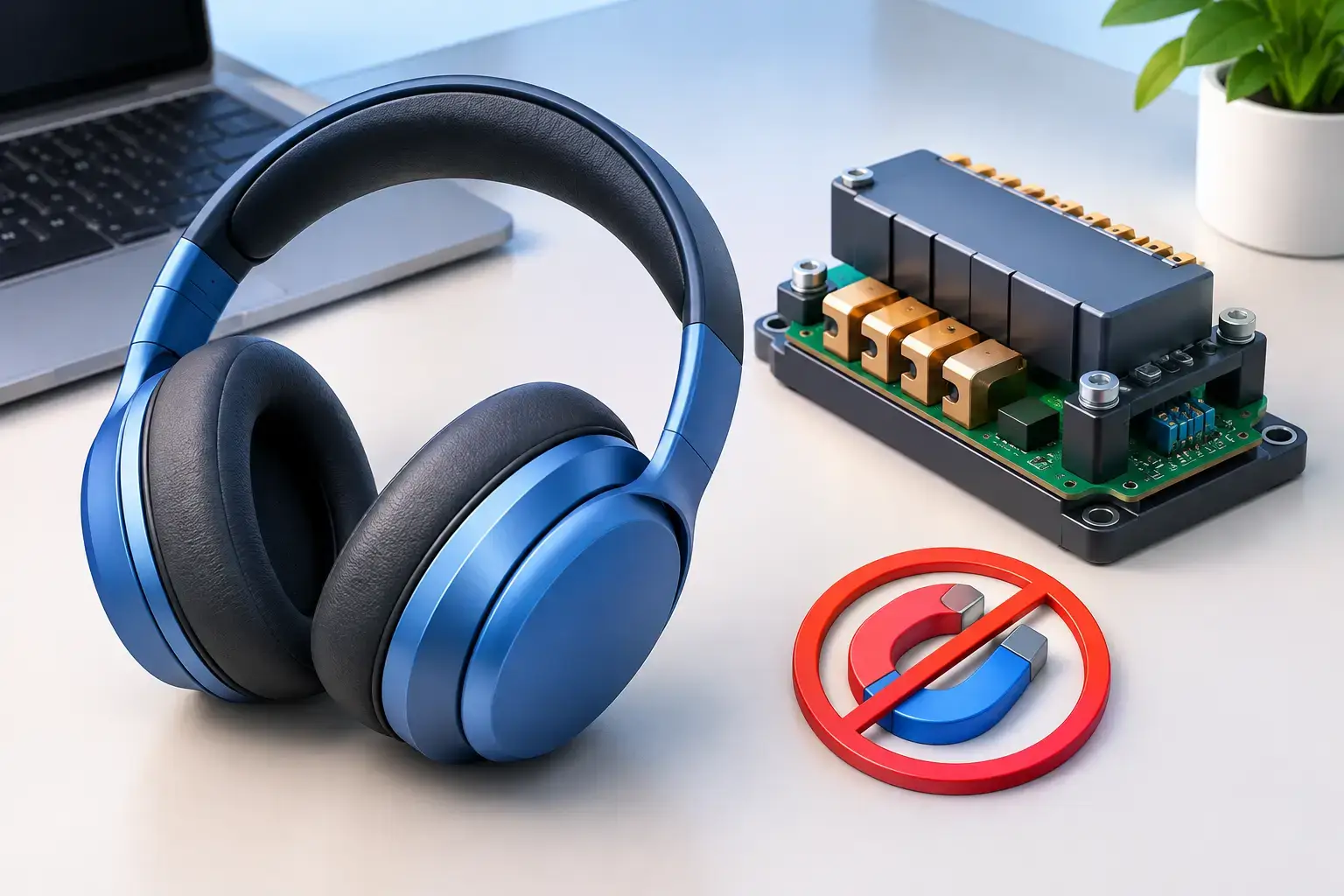
For people with programmable shunts, a simple pair of headphones can raise a serious question: could the magnets affect the valve setting? Headphones for programmable shunts should start with that safety concern, not treat it as an afterthought. The right choice can help a child, teen, or adult enjoy music, calls, gaming, and audiobooks without bringing unnecessary magnetic exposure close to the head.
Why standard headphones may not be a good fit
Many conventional headphones use magnets. They are commonly found in speaker drivers, earbuds, over-ear cups, charging cases, and magnetic clasps. A programmable shunt valve may be adjusted by a specialized magnetic tool, which is why magnets near the valve deserve careful attention.
The exact risk depends on the shunt model, the strength of a magnet, its distance from the valve, and the guidance provided by the valve manufacturer and care team. Some programmable valves have features designed to reduce unintended changes, while others may be more sensitive. That does not mean every household magnet or pair of headphones will change a setting. It does mean assumptions are not a safe purchasing strategy.
For families and individuals living with a programmable shunt, conventional headphones can create uncertainty. Earbuds sit close to the head. Over-ear headphones place speaker components directly beside it. Even when someone feels well and hears normally, an unintended valve-setting change may require medical attention.
The practical answer is to choose headphones designed without magnets and confirm the choice with the neurosurgeon, shunt clinic, or medical-device manufacturer that knows the specific valve. Medical guidance should always come first, especially after a new shunt placement, valve revision, unexplained symptoms, or a known magnetic exposure.
What to look for in headphones for programmable shunts
The most useful feature is straightforward: magnet-free construction. Look for a product description that clearly states it is made without magnets, rather than assuming that bone-conduction or open-ear headphones are automatically magnet-free. They are not all built the same way.
Open-ear design is also valuable. Instead of sealing the ear canal with an earbud or covering the ear with a cup, open-ear bone-conduction headphones rest on the temples. Sound is transmitted as gentle vibrations through the skull to the cochlea, the inner-ear structure that sends sound information through the auditory nerve. Because the ears remain uncovered, the listener can still hear much of what is happening nearby.
That matters in ordinary moments. A parent can hear a child calling from another room. A student can hear an announcement. A walker can stay alert to traffic, bicycles, and other people. At work, an employee may be better able to hear a coworker, vehicle warning, or alarm. Personal audio should not require giving up awareness.
Comfort deserves equal attention. A headset that rests outside the ear can be easier to wear for long calls, schoolwork, travel, exercise, or gaming. Fit will still vary by person, particularly for people who wear glasses, hearing devices, helmets, or head coverings. A secure but gentle fit is usually preferable to a heavy headset that presses against the temples.
Features that support everyday use
Beyond magnet-free construction, choose headphones with dependable Bluetooth connection, simple controls, and a microphone suitable for calls. Battery life matters when a device is used throughout a school day, work shift, or long outing. Sweat resistance can be helpful for exercise, but it does not make every headset suitable for heavy rain, swimming, or immersion.
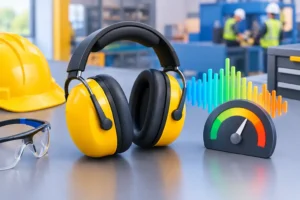
Volume control is another safety feature. Sound that is too loud can still contribute to hearing damage, even with an open-ear design. For workplaces where listening equipment is permitted, an 85 dB-capped OSHA-conscious headset can offer an added measure of control. Workers should still follow their employer’s hearing-conservation rules and site-specific policies.
Why bone conduction can be a practical alternative
Bone conduction is often misunderstood as a way to bypass hearing entirely. It does not. The headphones create vibrations that travel through the bones of the skull to the cochlea. From there, the auditory system processes sound in the usual way. Because the ear canal is left open, the user hears both their audio and the surrounding environment.
For someone with a programmable shunt, the key benefit is not bone conduction alone. It is the combination of an open-ear design and verified magnet-free construction. That combination can provide a more appropriate path to personal audio for people who have been told to keep magnets away from their shunt valve.
There are trade-offs. Open-ear headphones do not isolate noise like sealed earbuds. In a loud airport, busy gym, factory floor, or crowded event, music and voices may be harder to hear. Turning up the volume is not always the best answer, especially in a workplace or any setting where awareness is essential. Bone-conduction audio may also sound different from traditional headphones, with less deep bass and less privacy in very quiet spaces.
Those trade-offs are often worthwhile for people who value environmental awareness and need an alternative to magnetic headphones. The goal is not to recreate a sealed-ear experience. It is to make listening more accessible while respecting a real medical-device restriction.
Questions to ask before buying
Before choosing a headset, contact the medical professional managing the shunt and ask about the particular valve model. Ask what magnetic-field guidance applies, whether there is a recommended separation distance, and what to do if there is a possible exposure. Keep the valve information available for school staff, caregivers, and workplace health personnel when appropriate.
Then ask the headphone seller clear product questions. Is the headset fully magnet-free? Are there magnets in the speaker components, charging cable, charging dock, case, clasps, or accessories? Has the product been designed for people with programmable shunts or other implanted devices with magnet restrictions? Specific answers are better than broad claims such as “safe for everyone.”
It is also wise to understand the return policy, warranty, and support options before purchasing. A person may need time to see how a headset fits with glasses, a helmet, a hard hat, or daily routines. Reliable customer service can make that adjustment easier.
Safe habits after choosing a headset
A magnet-free headset can reduce one source of concern, but it does not eliminate the need for shunt awareness. Keep other magnets in mind, including some tablet covers, phone accessories, toys, jewelry clasps, wireless chargers, speakers, and medical or household devices. Follow the instructions provided for the specific shunt valve.
If a person with a programmable shunt develops symptoms that could be related to a valve setting change, such as headache, vomiting, unusual sleepiness, balance changes, vision changes, or behavior changes, contact their medical team promptly. Symptoms and next steps can differ from person to person, so this is not a replacement for individualized medical advice.
For children, a simple routine can help: use only the approved headset, store it in a designated place, and tell an adult if unfamiliar headphones or magnetic accessories are offered. Teens and adults can use the same approach when borrowing devices, traveling, or starting a new job.
A listening option that respects real restrictions
People with programmable shunts should not have to sit out of the everyday moments that audio makes easier: a favorite song on a walk, a phone call with family, directions during a commute, or a class recording after school. At the same time, convenience should never override the valve guidance that protects their health.
iheadbones designs magnet-free, open-ear bone-conduction options for customers who cannot use conventional magnetic headphones. The focus is practical: ears are not covered, surrounding sound remains more available, and people have a clearer alternative when magnets near the head are not acceptable.
The best headset is the one that fits the user’s medical guidance, comfort needs, and daily environment. With a verified magnet-free design and advice from the shunt care team, personal audio can feel less like a risk to manage and more like an ordinary part of life again.