For someone with a programmable shunt, cochlear implant, or another device affected by magnets, choosing headphones is not a simple matter of sound quality or price. Headphones without magnets can make personal audio possible without placing an unnecessary magnetic component near the head. They also offer a practical alternative for people who need to hear music, calls, directions, or training content while keeping their ears open to the world around them.
Conventional headphones are built around magnetic speaker drivers. For most listeners, that design goes unnoticed. For people with specific medical-device restrictions, however, magnets near the head may be a real concern. A magnet-free, open-ear design addresses that concern while helping listeners stay aware of traffic, coworkers, family members, alarms, and other important sounds.
Why magnets in headphones can be a concern
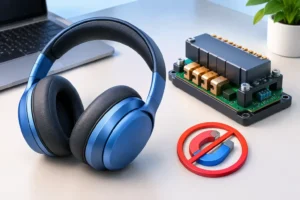
Most earbuds, headphones, and hearing-style audio products use small permanent magnets to move a speaker diaphragm and create sound. Those magnets are usually harmless for typical use, but certain implanted or programmable medical devices can have manufacturer-recommended distance requirements around magnets.
Programmable shunts are one example. Some shunt valves may be adjusted by a magnet, so a nearby magnetic object could potentially interfere with the valve setting. Individual devices, models, and medical guidance vary, which is why a listener should always follow the instructions provided by their physician and the manufacturer of their implant.
The practical problem is that standard headphones sit directly in, on, or around the ears. That location puts their magnetic drivers close to the head. Even products marketed as small, lightweight, or low-profile may still contain magnets. For families, caregivers, and adults managing their own medical needs, that can make ordinary earbuds a source of uncertainty rather than convenience.
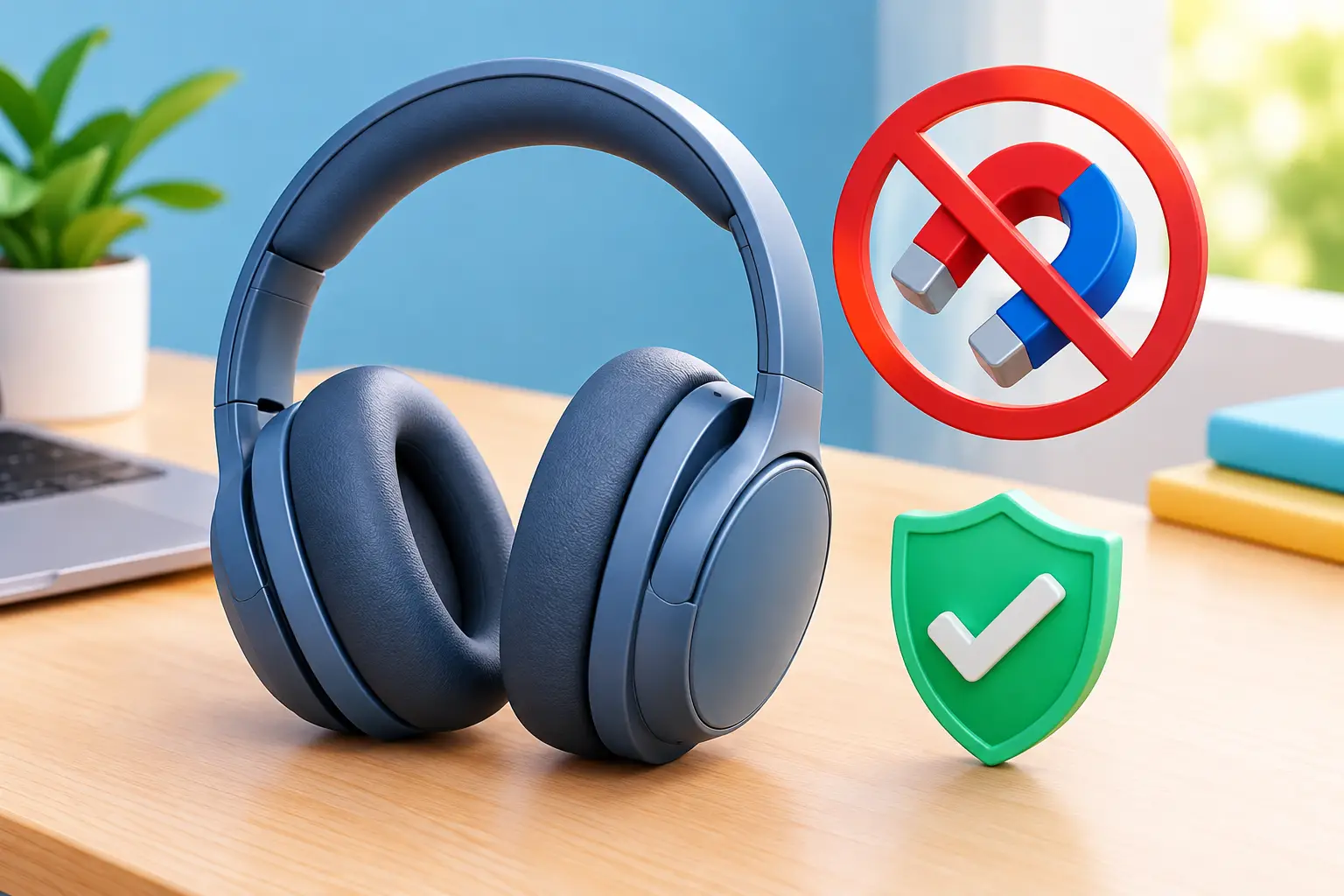
A genuinely magnet-free audio device removes one major concern from the equation. It does not replace medical advice, and it should not be treated as a blanket answer for every implant. But it gives people a purpose-built option when conventional headphones are not appropriate.
How headphones without magnets deliver sound
Magnet-free bone-conduction headphones work differently from ordinary speakers. Instead of sealing sound inside the ear canal, they rest on the temples, just in front of the ears. The ears remain uncovered.
Here is the basic process: audio is received from a phone, tablet, computer, or other Bluetooth device. The headset converts that audio into gentle vibrations. Those vibrations travel through the bones of the skull to the cochlea, the part of the inner ear that helps process sound. The auditory nerve then carries the sound information to the brain.
This approach is called bone conduction. It may feel unfamiliar at first because the sound does not come from a speaker placed inside the ear. After a short adjustment period, many users appreciate being able to hear their audio and their surroundings at the same time.
The open-ear fit is also useful for people who find earbuds uncomfortable, cannot wear in-ear devices, or simply dislike the plugged-up feeling of conventional headphones. There is no ear tip to insert, no ear cup pressing around the ear, and no need to remove an earbud just to hear what someone is saying nearby.
Open ears support better awareness
The benefit of open-ear listening is not limited to medical-device compatibility. Awareness matters in ordinary daily situations, especially when a listener is moving through shared spaces or working around people and equipment.
A runner can hear an approaching cyclist. A walker can stay more aware near road crossings. A commuter can catch an announcement. A parent can listen to a podcast without shutting out a child in the next room. At a warehouse, public works site, or construction area, workers may need to hear directions, vehicle movement, warning signals, and coworkers while still using a headset for calls or approved audio.
No headset can make an unsafe activity safe by itself. Listening habits, volume, workplace rules, and attention still matter. But leaving the ear canal open avoids one common barrier to situational awareness: physically blocking outside sound.
This is where open-ear designs differ from noise-canceling earbuds. Noise canceling can be valuable for travel, focused desk work, or relaxation in a controlled setting. In environments where you need to notice what is happening around you, the goal may be the opposite. You may want clear personal audio without disconnecting from nearby voices and warning sounds.
Choosing a magnet-free headset for work
Workers should begin with their employer’s policies and the conditions of the job. Some workplaces do not allow personal audio devices at all. Others permit approved headsets for communication, training, or limited listening. The right choice depends on the work area, the role, and the site’s safety requirements.
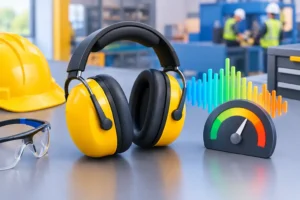
For settings where sound exposure is a concern, an 85 dB-capped option can be especially helpful. OSHA-focused headsets with an output cap are designed to limit the headset’s maximum volume rather than relying entirely on the listener to turn it down. That can support safer listening practices during a long shift.
An 85 dB cap is not the same as hearing protection, and an open-ear headset does not block hazardous workplace noise. If a job requires earplugs, earmuffs, or another form of hearing protection, workers should follow that requirement. The benefit of an OSHA-conscious, open-ear headset is different: it can provide communication or audio at a managed level while allowing environmental sound to remain audible.
Comfort matters here, too. A headset worn for calls, training, or a full workday should stay stable without creating pressure inside the ears. Look for straightforward controls that can be used without distraction, a secure fit, dependable Bluetooth connection, and battery life that matches the length of the task.
What to verify before you buy
The phrase “magnet-free” should be specific, not assumed. Many products that look similar to bone-conduction headsets still use magnetic components. If avoiding magnets is medically necessary, verify the product’s stated construction directly and keep documentation available if a clinician, school, or workplace needs confirmation.
It is also worth checking whether the headset matches the way you plan to use it. Someone taking occasional neighborhood walks may prioritize comfort and call clarity. A worker may need an 85 dB-capped model. A student may need a simple design that works reliably with a phone, tablet, and computer. A family managing an implant-related restriction may place magnet-free construction above every other feature.
Ask practical questions before ordering. Is the headset designed to leave ears uncovered? Is it explicitly magnet-free? Does it offer the volume limit required for the intended environment? Is there a warranty and clear product support if setup questions arise? These details are more useful than broad claims about premium sound.
At iheadbones, the focus is on giving people access to audio when standard headphone designs do not fit their safety, medical, or workplace needs. That means treating magnet-free construction and open-ear awareness as core product requirements, not afterthoughts.
A better fit for people conventional headphones leave out
Personal audio should not require someone to choose between following a medical restriction and staying connected. Nor should listening always mean covering both ears and losing track of the environment.
Headphones without magnets offer a different path: audio that rests on the temples, ears that remain open, and a design that considers the real-life restrictions many mainstream products overlook. Before making a choice, confirm the guidance for your medical device or workplace, then select a headset that helps you hear what you want without losing what you need to hear.